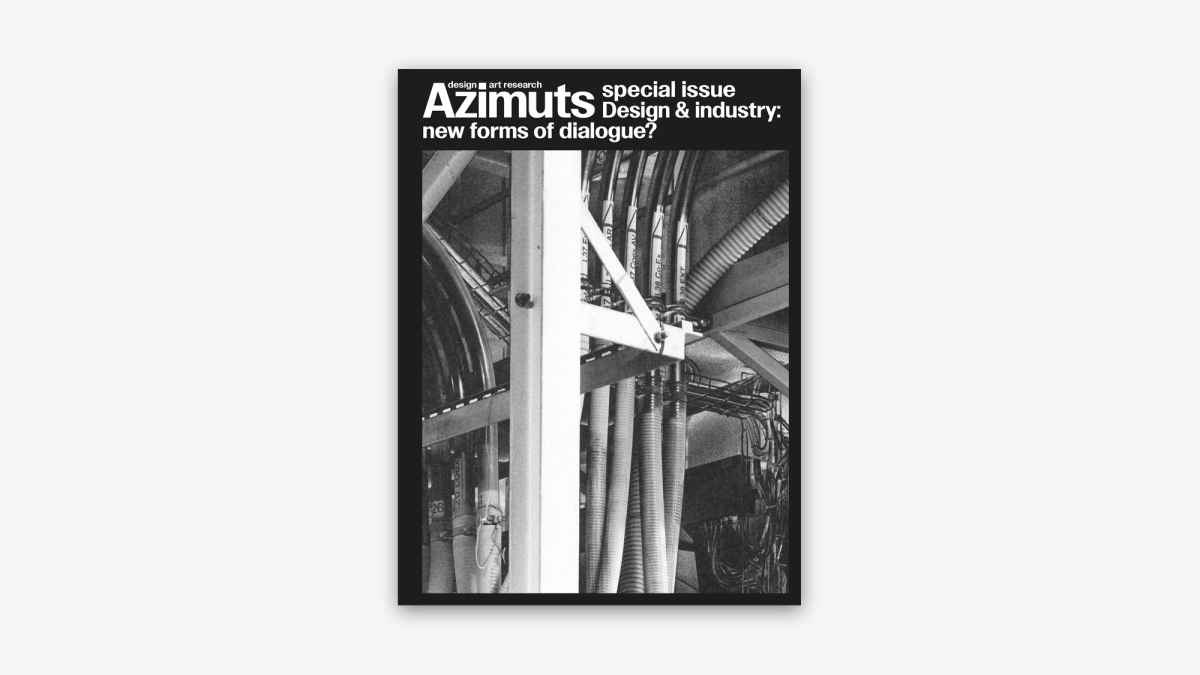
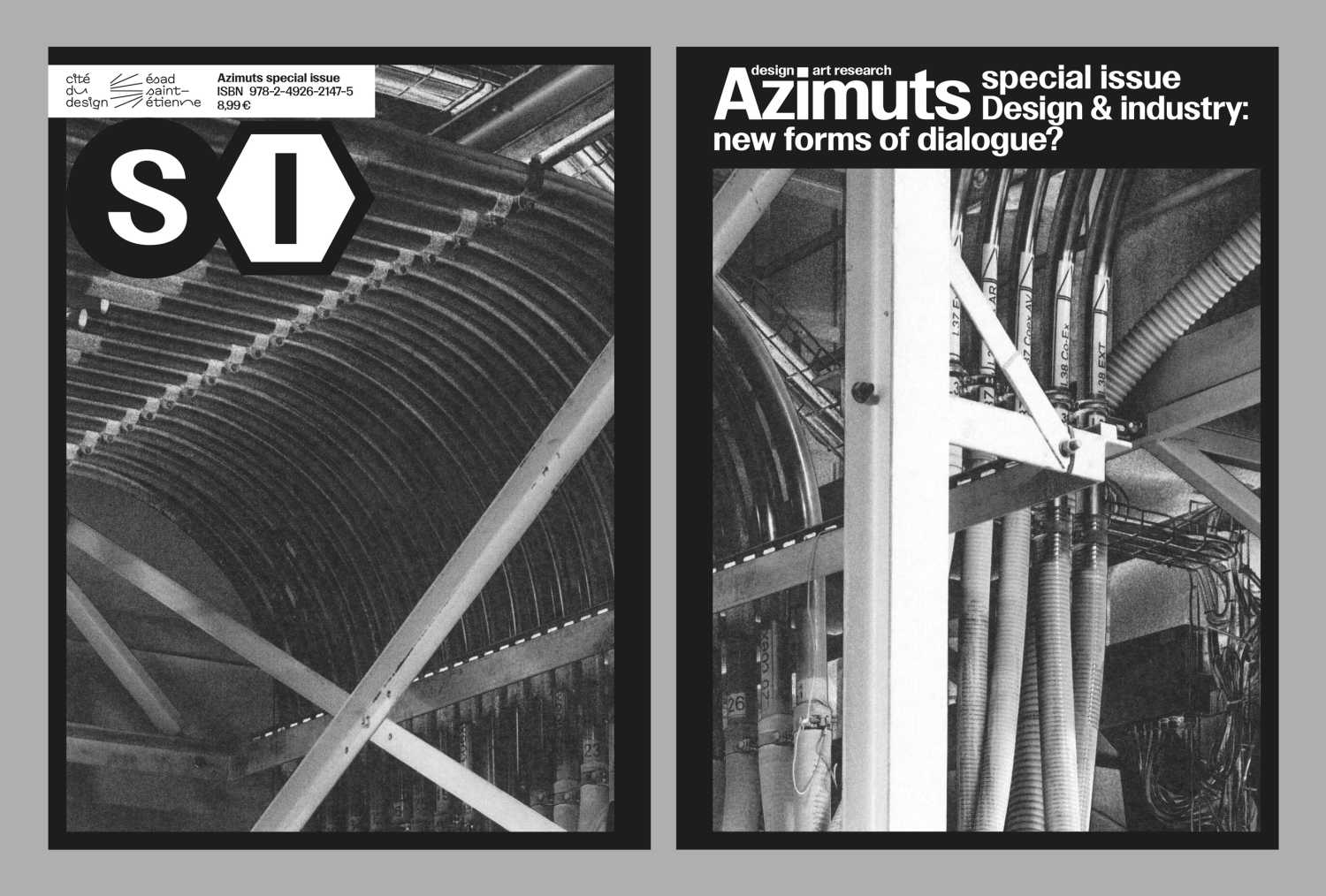
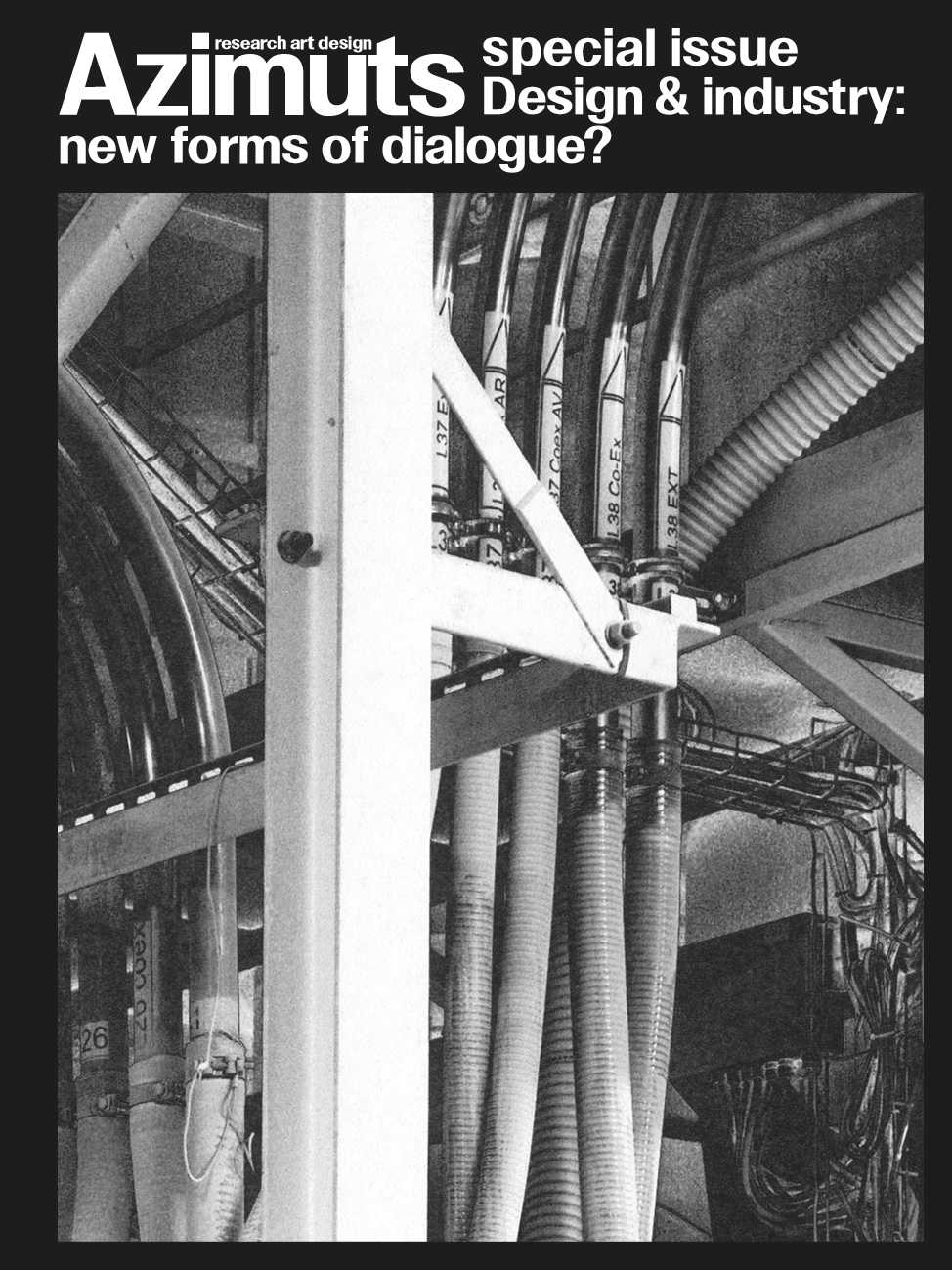
Azimuts – Research Art Design SPECIAL ISSUE devotes its first number to Design & industry: new forms of dialogue ?
Re-industrialisation is now emerging as a strategic priority. The concepts of industrial sovereignty and energy transition no longer apply solely to the economy, but outline a vision for society. In this context, the issue of design cannot be treated as a minor detail. It shapes the way in which we conceive, materialise and implement these changes.
However, the industry is currently undergoing a transformation. Automation, digitalisation, the integration of environmental requirements and partial relocations are redefining the very architecture of technical systems. Far from reviving the 20th-century model, today’s reindustrialisation is characterised by a systematic, interconnected and energy-constrained production process.
The aim of this special issue of Azimuts, edited by students from the first session of the Local Tools post-master’s programme, is clear: to document, analyse and explore these transformations without succumbing either to industrial nostalgia or to an abstraction disconnected from real-world infrastructures. That means combining critical thinking, planning and practical implementation.
Contents
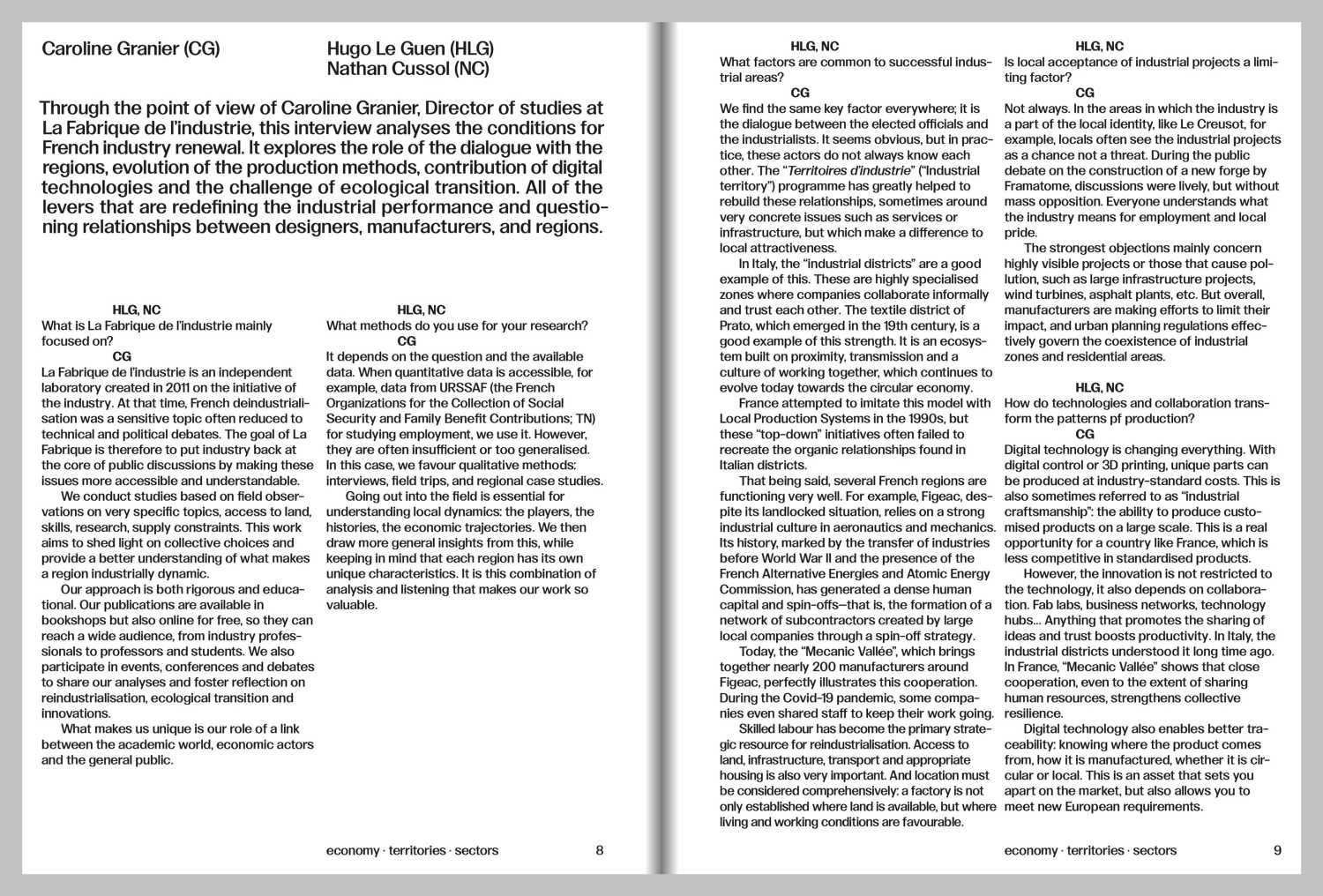
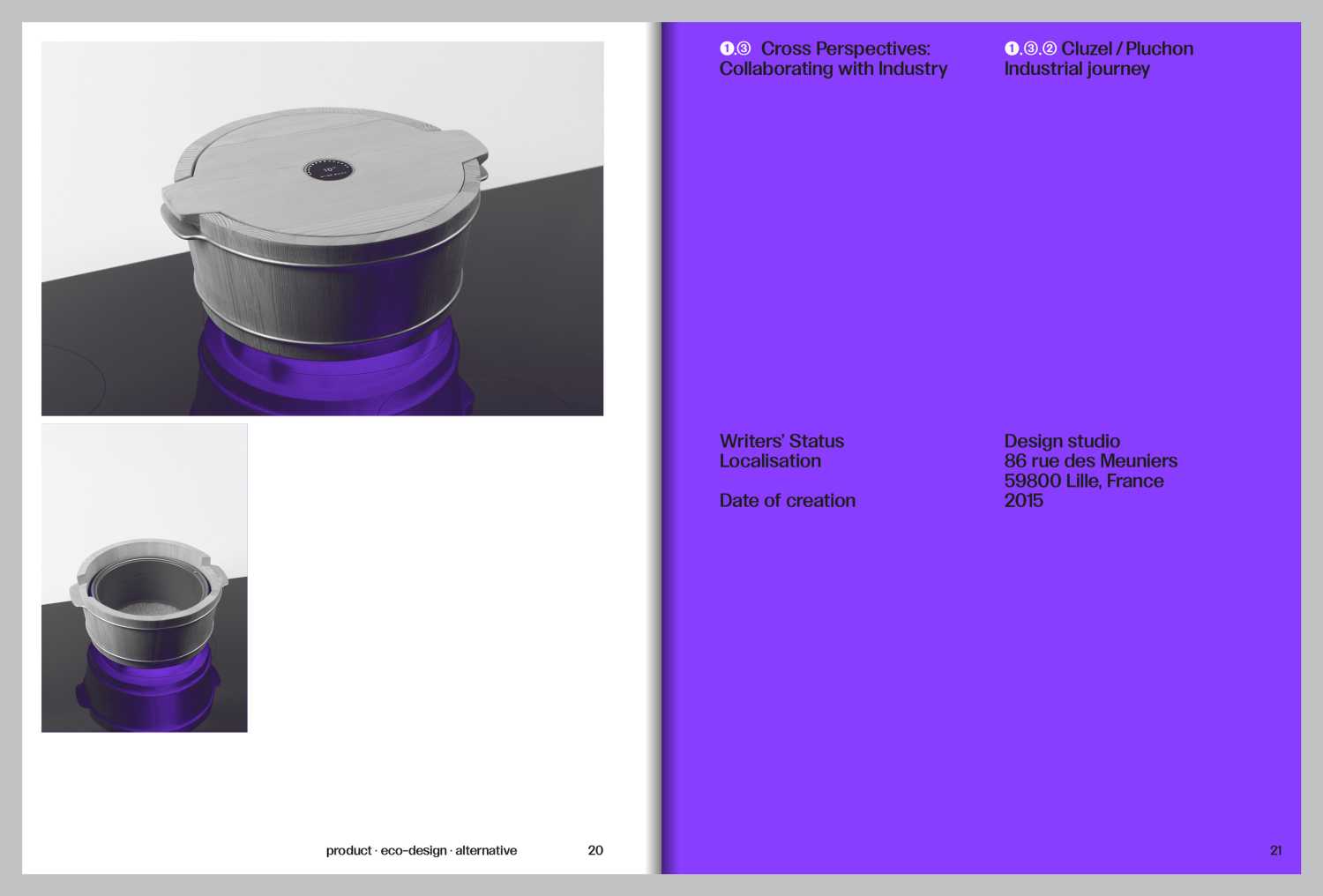
p. 3 — Editorial by Jean-François Dingjian p. 5 — Design, Industry and Research: How do these sectors enrich one another? p. 7 — Interview with Caroline Granier, La Fabrique de l’industrie p. 11 — Interview with Eñaut Jolimon De Haraneder and Visit to the Alki Factory p. 17 — Cross Perspectives: Collaborating with Industry p. 17 — Make better with less: rethinking the industry through design by natacha.sacha. p. 21 — Industrial journey by Cluzel / Pluchon p. 27 — APLAT Paper Lamps by CPRV p. 31 — Interview with Chetan Dekate, Toyota Boshoku p. 37 — Interview with Christophe Guberan p. 41 — Local Tools: Joint Research between Designers and Manufacturers p. 43 — Conversation with Marlène Gallien, CEO of Rondino p. 49 — Visual Portfolio: Materials, Processes, and Production Tools of Industrial Partners p. 65 — Conversation with Alexandre d’Orsetti, CEO of Sculpteo p. 69 — Local Tools: Design Researchers from the Ésad Saint-Étienne confronting industry p. 71 — WIP: the process behind the project by Nathan Cussol p. 77 — Making Do: How relation influence the project? by Hugo Le Guen p. 83 — Alphabet of the shapes: a tool for dialogue between industry and designers by Camille Sardet p. 89 — Local transformation: When constraints shape industry by Ismaël Rifaï p. 94 — Colophon et acknowledgements p. 96 — Partners
Editorial
Is design without industry an epiphenomenon?
Re-industrialisation is now emerging as a strategic priority. The concepts of industrial sovereignty and energy transition no longer apply solely to the economy, but outline a vision for society. In this context, the issue of design cannot be treated as a minor detail. It shapes the way in which we conceive, materialise and implement these changes. The modern history of design is inextricably linked to industrialisation. For Walter Benjamin, mass production transformed our relationship with objects, their circulation and our perception of them. Design emerged as a discipline capable of formally organising this new world; conceiving the object not as unique, but as a reproducible template. This industrial context is not merely a backdrop. It forms one of the cornerstones of modern design. However, the industry is currently undergoing a transformation. Automation, digitalisation, the integration of environmental requirements and partial relocations are redefining the very architecture of technical systems. Far from reviving the 20th-century model, today’s reindustrialisation is characterised by a systematic, interconnected and energy-constrained production process. It could be said that we are witnessing a new phase in the materialisation of technical objects. These are no longer defined solely by their performance, but by the extent to which they are integrated into their environment and a production cycle.
This shift has direct implications for design research.The aim is not to pit industrial design against artistic or research-based design. Artistic design, with its exploratory and critical dimension, plays an essential role. It explores formal possibilities, experiments with materials and examines emerging uses. It serves as an indispensable laboratory for shape and meaning.
Re-industrialisation calls for a broadening of scope. Design research must engage more directly with the production infrastructure itself, model production strategies, consider the repairability of objects, and situate contemporary industrial processes within the history of the forms on which design has built its foundations. In other words, the point is not to reduce design to industry, but to recognise that any industrial restructuring entails a formal restructuring. Decisions regarding energy, logistics or standards are not neutral. They determine the form of objects, user experiences and material contexts. From this perspective, design is not merely an addition to re-industrialisation; it is one of its key drivers. The aim of this special issue of Azimuts, edited by students from the first session of the Local Tools post-master’s programme, is clear: to document, analyse and explore these transformations without succumbing either to industrial nostalgia or to an abstraction disconnected from real-world infrastructures. That means combining critical thinking, planning and practical implementation. Modern industry is a prime area of investigation for rethinking the relationships between technology, production and shapes, and strategy. It compels design to redefine its position, no longer merely at the interface between object and user, but at the intersection of production systems, ecological environments and the forms it produces.
This shift does not marginalise design. It redefines its productive, political and societal ambitions. It offers a strategic vision. Provided that the research community is willing to fully engage with this field, industry today is not just a context, but becomes, at the level of infrastructure, a real laboratory for thinking about design.
Doctor of Economic Sciences & Director of studies at La Fabrique de l’industrie
Chairman of the administrative board and Chief Executive Officer
natacha.sacha. is an industrial design studio based in Paris.
The Cluzel / Pluchon studio develops an industrial design practice attentive to uses, manufacturing processes and economic constraints.
Founded by Camille Paillard and Romain Voulet, CPRV develops an industrial design practice attentive to contemporary uses, production contexts and the accuracy of means.
Designer at the Toyota Boshoku studio
Industrial Designer and Researcher
Chief Executive Officer of Rondino
Chief Executive Officer of Sculpteo
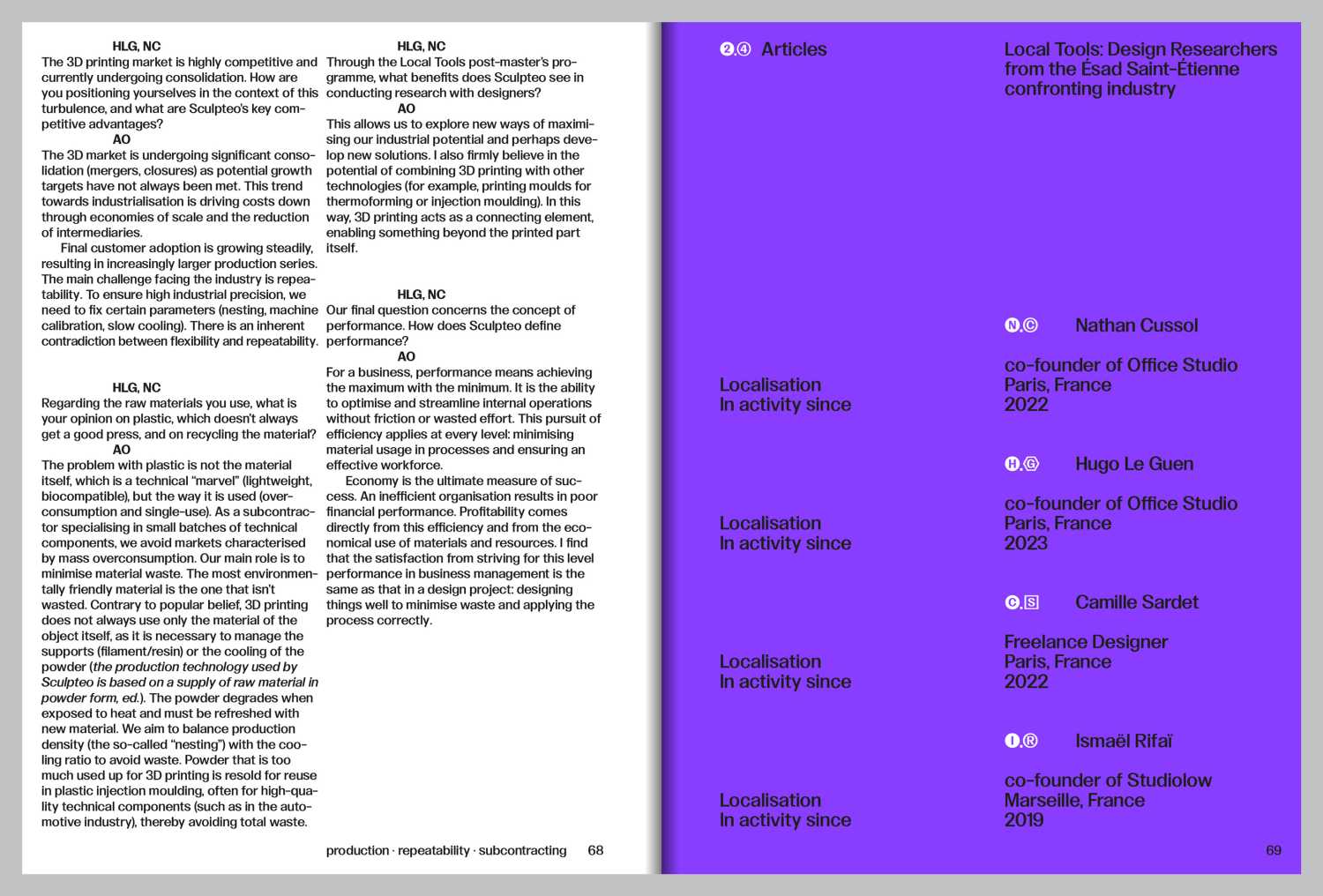
co-founder of Office Studio Paris
co-founder of Office Studio Paris
Freelance Designer Paris
co-founder of Studiolow Marseille
Post-master Research Local Tools
This special issue is carried by Post-master Research Local Tools (design &
industry) of Ésad Saint-Étienne.
The post-master Local Tools aims to put designers and manufacturers in a common situation of research, reflection and action around strong themes, linked to contemporary societal, environmental, digital and strategic transformations.
Distributor and broadcaster : les presses du réel Publisher : Cité du design - Ésad Saint-Étienne Publication : April 2026 Language: English Format: digital pdf Pagination : 96 pages ISBN : 9782492621475 Price: 8€99